• Log In
  • Skip to primary navigation
  • Skip to content
  • Skip to primary sidebar

Scholarship Opportunities Program

This blog documents the experiences of Prestigious Scholarship winners

  • Home
  • About

About the SOP

November 7, 2013 by sklrship@uci.edu

**The Scholarship Opportunities Program advises competitive undergraduate UC Irvine candidates in applying for prestigious merit scholarships. Our staff conducts outreach and manages the campus-level application and endorsement processes for these national and international scholarships, all funded by outside agencies. Applicants cannot apply directly to the funding agency (except NSF).

Please visit our main website for application information, deadlines, services provided by our office, and more details about all of our prestigious scholarships.**

This blog captures the experiences of our past scholarship recipients, as they embark on journeys around the world funded by grants and fellowships such as the Fulbright, Strauss, Rhodes, and others. Read about their exciting adventures below!

DISCLAIMER: The views and opinions expressed in this blog site are those of the authors and do not necessarily reflect the official position or views of the Scholarship Opportunities Program or UC Irvine.

Filed Under: SOP Blog

Vanessa Le – Fulbright – South Korea

January 27, 2022 by sklrship@uci.edu

12/23/2021 | Vanessa Le (She/Her), graduated with a major in Education Sciences and a minor in Korean Literature and Culture, and specializing in English Language Learning. During her time at UCI, she was involved with the Antleader Mentorship Program, Badminton Club’s competitive sport team, Dr. Young-Suk Kim’s Language, Literacy & Learning Lab, and served as ASUCI’s International Student Advocacy Officer. As a Fulbright recipient, Vanessa is currently pursuing a Master’s Degree in Korean Studies at Yonsei University in Seoul and hopes to one day work in higher education to inspire students through the intersections of international education and Korean culture and language.

Found below are Vanessa’s personal stories and experiences during her Fulbright:


After graduating from UCI earlier this year, I officially began my Fulbright Korean Studies Master’s Degree Grant at Yonsei University’s Graduate School of International Studies (GSIS) in August. Coming in, I felt nervous about the academic rigor I would be facing and a bit disenchanted by the prospects of having to return to “Zoom university,” but my studies went smoothly. Also, with any pitfalls and struggles I have encountered living in Seoul, Fulbright’s Korean-American Educational Commission (KAEC)–one of the few Fulbright commissions that owns an entire building for its operations–has provided me with a wonderful support system with solid and reliable on-site services.  

One plus side of virtual schooling is the added layer of convenience to daily life. I do not have to waste too much time commuting to and from school, and I have more opportunities to explore different parts of the city. I have also been able to cook much more often than I expected, which is something that I basically never did during my year abroad here as an undergraduate. However, I have been taking advantage of the wide selection of Korean cuisine here as well. 

After wrapping up my first semester, the biggest takeaway that I gathered is that the global issues we face today demand collective collaboration. Because Yonsei GSIS is an international institution, our student body is composed of people from all walks of life and various cultural backgrounds. I have not only been exposed to more Korean culture, but also that of many other countries, too. It really is true that once one leaves their home country, they are able to take a much better, closer look at it. Many non-Americans that I have met in Korea associate the US with a place of ultimate power. Personally, such a thought never crossed my mind until studying abroad. My newly acquired “outside” perspective of the US includes mixed feelings related to pride and entitlement but also criticism about its need to be more environmentally-conscious and socially and culturally inclusive. However, there is no perfect nation or government, and I have learned that some issues of importance to many South Koreans include xenophobia, discrimination, wealth inequality, lookism, hyper-consumerism, and high levels of pollution in metropolitan areas. As someone from a background in education, I’m inspired by the cross-cultural exchange I have engaged in here, which has intensified my ambition to promote multicultural awareness and tolerance in my future career. 

When not listening to lectures at home, I like to study at cafes; the places with especially large windows are my favorite! Before moving into the Fulbright building, which is located in a much denser, more urbanized area of Seoul, I lived in a quaint neighborhood called 망원동(Mangwon-dong) for about a month. It is filled with cute cafes and a lively local market as well. I highly recommend anyone to take a stroll around 망원동(Mangwon-dong) to experience a quieter, more laid back atmosphere of Seoul. 

My hobbies outside of school include playing badminton and going to concerts. I frequently participate in Yonsei badminton team practices and events as well as play with other, non-school-affiliated clubs. I have been playing badminton for over 8 years and find it to be the best form of exercise while being able to socialize at the same time. I do not know much about Korean pop idols, but rather love the music of Korean singer-songwriters and bands. Despite the pandemic, I have been privileged to attend concerts from some of my favorite artists of all time.

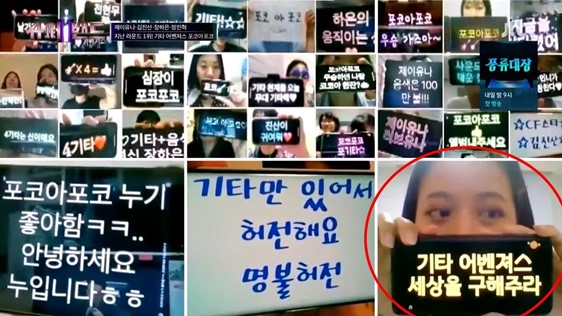
One random, fun fact that I would like to share is that I appeared (virtually) on my favorite Korean TV show ever! “Superband 2” gives skilled musicians, from classic violinists to indie buskers, an opportunity to collaborate across multiple stages, experiment with diverse genres of music, and ultimately create a unique band. I participated in a live audience voting panel for the final stages of the show and had my few seconds of fame from the comfort of my bedroom, too. The image below is a capture of when the audience members displayed messages of encouragement for one of the bands. My (quite embarrassing) appearance includes the message, “Guitar avengers, please save the world”. The specific band that was about to perform is made up of four guitarists, two of whom are also vocalists, hence, “guitar avengers”!

I am always grateful for the time I get to spend here in Korea, and I am continuously working to expand my comfort zone to encompass this new home. The bits and pieces of my life in Korea that I have chosen to share are part of my humbling journey of learning. Thanks for taking a peek at it! Here is one last healing picture of an autumn sunset~

Filed Under: SOP Blog

Mando Eijansantos – Fulbright – Japan

January 4, 2022 by sklrship@uci.edu

12/15/2021 | Mando Eijansantos (They/Them), graduated from UCI with a major in Biochemistry and Molecular Biology. Mando spent their time as a UCI undergraduate conducting research on radioactive bone cement for treatment of spinal metathesis under the guidance of Dr. Joyce Keyak. Currently abroad in Japan researching radiation dose rate and DNA repair under the guidance of her affiliate Dr. Yoshihisa Matsumoto at the Tokyo Institute of Technology, Mando plans to return after the grant and continue working on the radioactive bone cement project while pursuing a Ph.D. in Biomedical Engineering at UCI.

Found below are Mando’s personal stories and experiences during their Fulbright:


My first month in Japan taught me how to transition from thinking like a tourist to thinking like a resident in this country. When I moved in to my apartment in Omori, Shinagawa, I found that my neighborhood was a charming, peaceful place that was popular for raising children – which meant that tourists and foreigners were almost entirely absent, and no one in the neighborhood spoke languages other than Japanese. I had to get my rusty Japanese language skills up to speed very quickly to get myself settled here. It was especially difficult to accomplish tasks such as opening a bank account and registering my address at the ward office. In the beginning, I started every conversation with, “I’m terribly sorry, but I am not good at Japanese…” Though, now, I think it has been at least a week since I began a conversation that way, so I am definitely becoming more confident in my speaking skills! 

Fortunately, outside my home neighborhood, I’ve been able to communicate in English. At TITech, I’m gradually getting to know my lab mates. This is the first experience I have had in a large lab group, of about 25 students. I’ve found that because of COVID-19 precautions, it is much more difficult to talk idly with my lab mates than years before. I was told that the students used to relax and socialize in our lab space, but because of the pandemic, nowadays students only come in to work and then go home immediately. Hopefully, despite this barrier, I’ll be able to make strong connections with my lab mates.  

Though I’ve been getting used to living in Japan as a resident more than a tourist, I did do a lot of sightseeing during my first month! I had to check it off the to-do list before my lab work becomes busy. I tried to go somewhere new every weekend, and I visited Ikebukuro, Kagurazaka, Shibuya, Shinjuku, Kamakura, Kichijoji, and mount Takao. I also met up with some of the other Fulbright grantees, which was especially fun because we could share our experiences and relate to each other easily. When I was exploring Shinjuku-ni-chome with another Fulbrighter to check out the popular LGBT hotspots we had heard about, I accidently missed the last train back to Shinagawa. But I heard that staying at a bar overnight was a popular thing to do in Tokyo on the weekends, so I ended up spending my entire night at a small lesbian bar. When I explained to the bartenders how I got stuck there, they laughed and told me that everyone else is here intentionally, so it will be fun. The other guests were doing karaoke and were impressed that I knew so many Japanese songs, so I was able to join them. I think that was the most fun I’ve had in a setting where I could only speak Japanese. 

Thinking about the personal goals I set for this grant period, I think I’ve made a decent start. In terms of research, the progress is slow due to the training period and learning period, since I have never worked in a lab like Matsumoto-sensei’s lab. I think my training will be complete after December, so I wonder what I can accomplish in the remaining eight months. I also had a goal of making connections with people in Japan, which I think I achieved by joining the dance club at TITech and by meeting people in my neighborhood in a local public chatroom. Though there is a bit of a language barrier, the people I’ve met in these spaces are friendly and encouraging. I hope I can improve my Japanese conversation skills to become more connected with them. Lastly, I wanted to be a contributor of my local community. I tried searching for volunteer work in LGBT resources or English lessons, but due to the pandemic, it was difficult to find available positions. I eventually caved in to a somewhat selfish desire and began volunteering at a pet shelter near my apartment. I’ve been missing my dog so much since I left the USA, so working with these animals has been my favorite weekly activity so far. I’m still rather new, so I hope the staff will eventually trust me to communicate with their English-speaking customers.

Looking forward, I see some challenges ahead that I aim to accomplish. First and foremost, I want to improve my Japanese conversation skills to strengthen my relationships with the people I’ve met so far. I also want to explore places outside of Tokyo, such as Hokkaido or Kyoto. Lastly, to further my research goals, I hope to travel Hiroshima, Nagasaki, and Fukushima sometime soon and visit the nuclear history memorials and museums. 


Left: Playing Taiko Drum arcade game in Kagurazaka, Tokyo with another Fulbright Young Fellow from Stanford.

Middle: View of Mt. Fuji from the peak of Mt. Takao. hiking trail.

Right: Myself with a beautiful Momoji tree on Mt. Takao

Filed Under: SOP Blog

Madeleine Hart – Fulbright – Germany

April 6, 2020 by sklrship@uci.edu

Madeleine Hart (’17, Major in Psychology and Minor in German Studies) has a background in urban education, which, along with her work in conflict analysis with the Olive Tree Initiative, inspired her to pursue one of Germany’s prestigious Diversity Placements, which she received. According to Fulbright, the twenty Fellows (out of 140 total) who receive Diversity Placements are assigned to schools with “significant numbers of students with minority or refugee backgrounds,” and, like all ETAs in Germany, Diversity Program participants must “have the capacity to negotiate cultural differences and respond to challenges” in these dynamic environments.

Found below are Madeleine’s personal stories and experiences during her Fulbright:


Hello everyone!

I am writing an update at the end of month six of my ten-month Fulbright ETA grant in Germany. Currently, it is 46 degrees Fahrenheit, but the sky is blue. Everyone here is hoping for an early spring!

I live in the city of Saarbrucken, which is located on the border of France about an hour south of Luxembourg. One of the biggest adjustments for me has been living in a small city – about 180,000 people – with no major metro area surrounding it.

I work in a Gemeinschaftsschule or “community school” which is meant to bridge the gap between the traditionally segregated college-bound Gymnasiem and trade school-bound Realschulen. The grade level at my school is 5th– 13th, but I mainly work with the 8th-10th graders. My placement in Fulbright Germany is considered a “diversity placement,” so my school has a very diverse population. About 85% of my students have a “migration background,” and I have a few classes where only one or two students in the class were actually born and raised in Germany. When students feel comfortable sharing personal details, it can be a really cool education environment where students learn about each other’s backgrounds and cultures. The challenging side of this, however, is that some students do not have a solid German language foundation, causing them to have some issues learning English in a German-to-English learning environment.

My day-to-day in the classroom usually consists of either team-teaching lessons with a teacher or taking small groups of students into the discussion rooms that are attached to the classrooms and reading English language readers together. I try to use as little German as possible, so I’ve taken to drawing out scenes of the book that they don’t understand. In some classes, we’re reading Frankenstein, which is a pretty gruesome story. It’s hilarious when I attempt to illustrate the more heinous details of the story in my hastily-drawn cartoons, and it breaks up the reading for the students so we can all have a laugh.

I think the thing that has made the single biggest impression on me are some of the social problems in Germany that I wasn’t privy to before my arrival. Because of Germany’s tragic history, there is an awkwardness around the topic of race. In fact, the word “race” in German is considered taboo to even say; the generally accepted attitude is one of “colorblindness.” Yet, racism is as much a problem here as it is in the United States. As previously mentioned, the majority of my students are not German, and many of them have confided in me experiences of racism or xenophobia they’ve experienced, and I have also personally witnessed it. While trying not to see race may be a well-intentioned attempt at inclusivity, in order to address the issue head-on we need the vocabulary to talk about it effectively. To measure and address issues like housing or job discrimination, for example, governments must first acknowledge there are people from various races living in the country.

This experience has reframed for me some of the social problems that the U.S. faces. Prior to my Fulbright grant, I was quick to criticize American values and laud what I perceived as being a progressive utopia in Germany. While I still feel that our system is broken, I now have more nuanced views of both countries and see so much more possibility for change and growth in the U.S. than I did before. We are working with a blueprint for identity that is fundamentally different from the one that is used in Germany and riding the current of anti-racism toward – hopefully – some solutions. I feel so excited to come back to the U.S. as a future attorney and join the movement toward a better, more inclusive country.


Below are some of the photos Madeleine shared with us during her Fulbright —

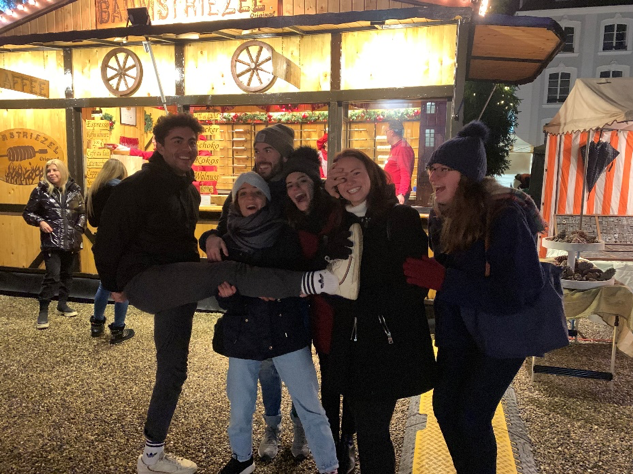
A very elegant group photo from Saarbrucken Christmas market.

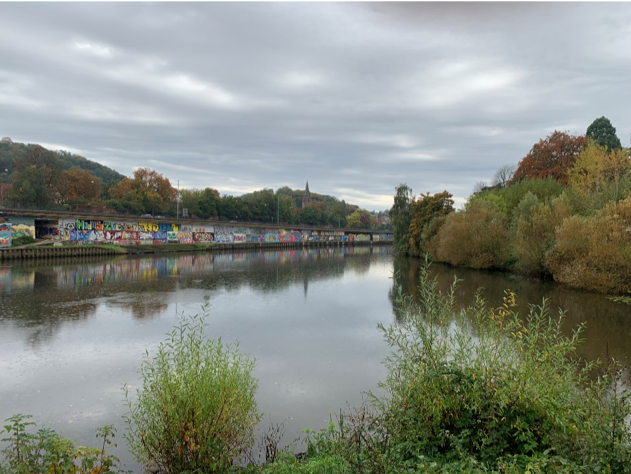
The Saar River that runs through the city (Saarbrucken means “Saar bridges”).

This is what most of the city looks like.

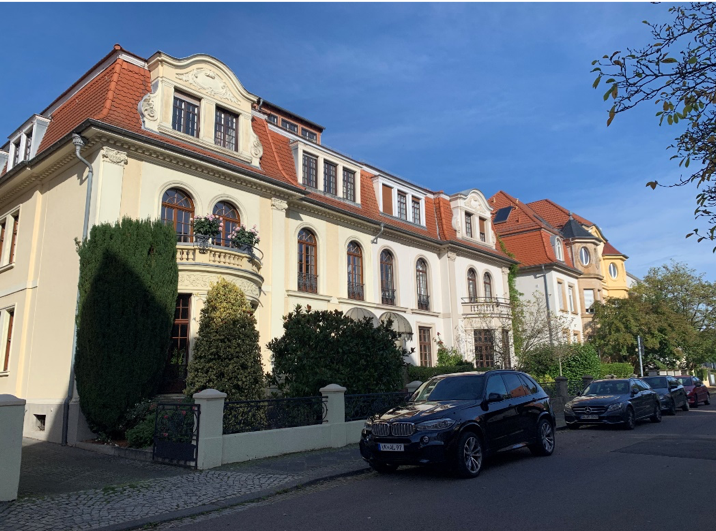
Some houses in the more affluent part of town.

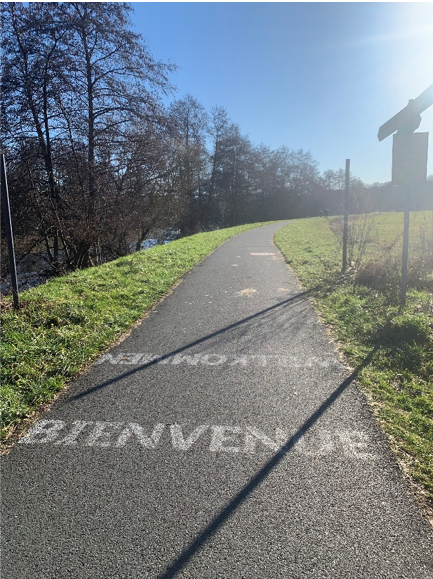
The border of Germany and France where I bike sometimes. It says “welcome” in French on one side and in German on the other.

Filed Under: SOP Blog

Joyce Nguy – Fulbright Recipient – Taiwan Experience

March 12, 2020 by sklrship@uci.edu

Joyce Nguy (’19 Political Science, Education Sciences) was awarded the Fulbright Teaching Assistantship and is currently teaching English in Taiwan. Here are a few of the many moments Joyce experienced during her Fulbright year —

Taiwan 小朋友

“Little friends,” I translate affectionately over weekly calls home to loved ones. In Taiwan, students are widely referred to us 小朋友, literally “little friends,” (a.k.a the cutest term ever). More than halfway through my Fulbright grant, little joys continue to fuel my days on an island 1/13 the size of and thousands of miles away from my home state of California.

Graduating in June of 2019 and leaving a month and a half later for August training in Taiwan was a whirlwind! I had never left home for so long. A San Diegan through and through, and then a proud Anteater, I found the transition into living in Taiwan challenging, even though I had waited for so long to go on such a big adventure. My biggest tip is to maintain your support system at home, but also be present and in the moment. I found such a great support system in the 10 other ETAs that live in my county, and have continued to lean on them and explore with them throughout the whole year.

I was placed in Changhua County, an agricultural county in the middle of the west coast. Although I originally preferred to be located in a city like Kaohsiung or Taichung, living in a quiet small city/suburb of Yuanlin City has allowed me to see a slice of real Taiwanese life. While I have easy access to all the big cities via bus or train (Taiwan is SO convenient and interconnected!), I typically enjoy staying within my county and experiencing the local culture that is hard to find in the cities. Plus, many people in my county do not speak a lot of English, which mostly presents a welcome challenge if you want to practice your Mandarin Chinese, or learn Taiwanese from the grandpas at the shops!

I currently teach at 5 schools in Changhua. My main school is Fen Yuan Elementary School, located in rural Fen Yuan Township, known for its pineapple production. Every Monday, Tuesday and Friday morning a teacher picks me up from my apartment and makes the scenic drive through the mountains and pineapple farms to take me to school. My school is considered midsized with about 400 students total, and while I primarily teach English to 5th and 6th grade, I interact with all of the students at school (1st grade – 4th grade) through my storybook class, where I teach character education and English with the help of storybooks in our library. On Wednesday’s and Thursdays, our government sends us to other schools on a rotating schedule so that we can reach as many students as possible in our short time in the country. In a typical week, I teach 18 elementary school classes, each with their own unique personality!

One of my favorite things about living in Taiwan as an ETA was getting licensed to ride a scooter during August training. With scooter culture being huge in Taiwan, scooter training is essential and built into our orientation! After getting licensed, I bought a scooter (her name is Mantis) and have been scooting around ever since. People even use their scooters to pull up to tea shops or food stalls like a drive-thru, and I have since applied my scooter experience during travel. I have rented scooters at the beach in Kenting (southern Taiwan), and even rented a scooter in Thailand during winter vacation!

My Fulbright grant has provided me with the opportunity to live and work abroad, and become part of a community that has welcomed me with open arms. There’s the egg lady, who always adds an extra egg to my bag, insisting that I eat more. There’s the director that drives me home from school, who always takes small detours on our way back so that he can show me his favorite spots in town. And there’s my LET (local English teacher), who brought me to get chocolate on a particularly hard homesick day and brings soymilk for my coffee in the morning, even when I tell her not to. Love and care for others knows no borders and have no singular language. Even though some days are harder than others, every moment of discomfort has yielded life lessons and learning. When I return to the U.S. as a graduate student at UCLA, I will carry this year with me as one of the most impactful in my life.


Below are some of the photos Joyce took during her Fulbright year —

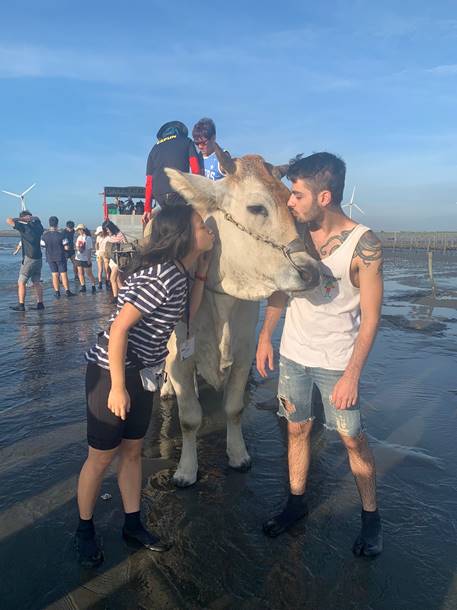
Kissing the Sea Cow

“Fulbright Taiwan makes sure you get an immersive cultural experience. The Changhua ETAs went on a field trip to Fangyuan township, which is famous for its oyster fishing and peanuts. While there, we got to ride a cart drawn by a ‘sea cow’ into the ocean to visit the oyster farms.”

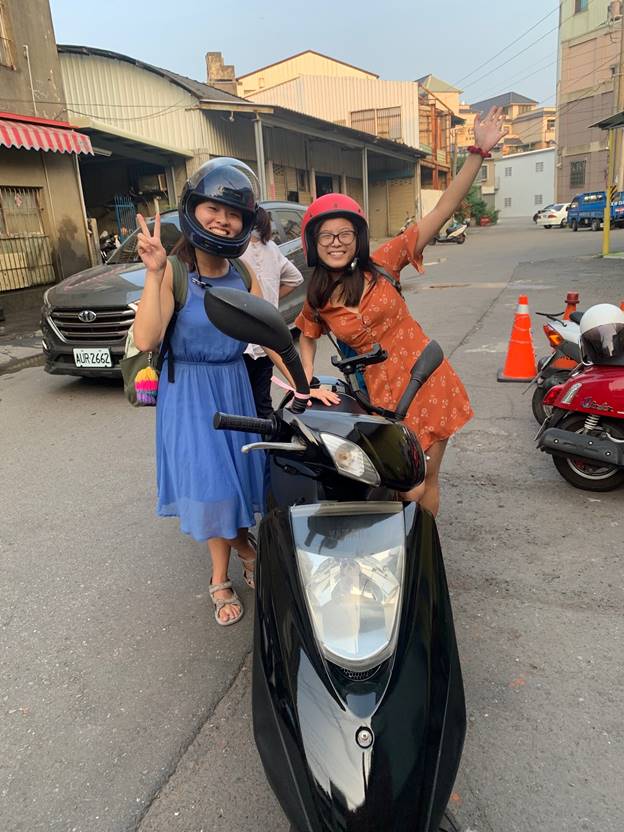
Mantis

“The day I bought my scooter with my roommate! The best investment I have ever made.”

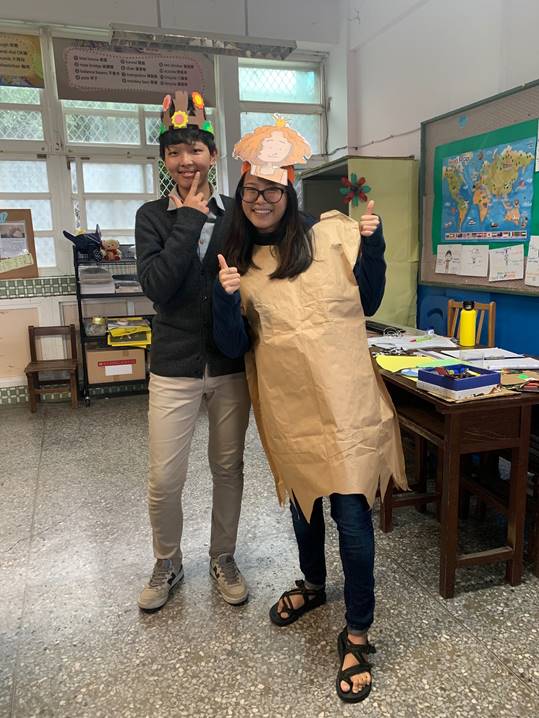
School Culture

“I started to work with the counseling department at my school to help me with storytime! The counselor gives ‘talkbacks’ after my storytime to tie our stories into character education. For example, we used ‘The Paper Bag Princess’ to talk about gender inequality.”

Changhua Cohort

“11 ETAs live and work in Changhua county. We live together, train together, and teach together!”

Running Culture

“Taiwan is a country of runners and active aunties. The Tianzhong marathon, held in Taiwan’s ‘rice heaven,’ is a Changhua spectacle. I ran/walked the 10k to enjoy the food along the way (fried chicken, guavas, shrimp, pasta, and so much more)! One of our ETAs ran her very first half-marathon here and won first place, a Fila sponsorship, and a massage chair for her apartment.”

Storytime!

“My Local English Teacher(LET), Yinhsueh, and I in action in our school’s library.”


Filed Under: SOP Blog

Alexander Alvara – Fulbright Recipient

February 13, 2020 by sklrship@uci.edu


Alexander Alvara (Fulbright 2017)

Alexander is a recent alumni who triple-majored in Mechanical, Aerospace, and Materials Science Engineering and minored in Biomedical Engineering and Business. His research includes development of a carbon fiber unmanned drone, a user-controlled prosthetic hand, a mobile phone compatible spectrometer, and an “exosuit” for shoulder and bicep rehabilitation. Alexander was a mentor for the Office of Access and Inclusion and is now a Ph.D. student at UC Berkeley in Mechanical Engineering researching condensed matter physics, high-energy nanotechnologies, and space systems. Alexander is also a recipient of the National GEM Consortium Ph.D. Fellowship, NSF CRFP Honorable Mention, and the Berkeley Chancellors Fellowship. In 2017, Alexander received a Fulbright U.S. Student Program award to research medical robotics and develop pediatric surgical robots for bone biopsy and neurosurgery applications at the University of Toronto in collaboration with The Hospital for Sick Children (SickKids) and Engineering Services Inc., a precision robotics company.

Recently, the SOP office conducted an interview with Alexander, and provided below are his responses about the application process and tips for future applicants:


What did you learn about yourself during the scholarship application process?

During the application process, I learned a lot about asking for help around the campus… I learned I didn’t know my campus as I thought I did. I had been around and I tried to make it my duty to really know what resources were available to me. But, obviously, I didn’t do that great of a job. Because the Scholarship Opportunities Program was a huge help to me and I just found out through chance by walking by one of their workshops. 

And the second most important thing that I learned was I may not be the best storyteller when it comes to myself. I can talk about research, I can talk about other things, but that was really a big hurdle for me, learning how to talk about myself during the application.


What are the biggest benefits of working with SOP?

So, the biggest benefit of working with the SOP, was that they had a lot of hands-on help. The fact that they offer so much help and so much feedback was actually a huge, huge factor for me. They helped me through at least 20 revisions and helped me whittle away the problem I mentioned earlier of not being able to talk about myself. They really helped me to grow and develop my writing style and had it not been without them, I am not sure that I would have gotten the scholarship. I went through like 20 revisions of my application, and the strongest ones were usually from, interestingly enough, the strongest revisions came from the non-technical side because it had to be readable for the general audience. For people that are policymakers and people who are administrators, so it wasn’t just about my research.


Do you have any advice for students who are considering applying for scholarships? 

My biggest advice would be to just apply. No matter what, apply.

You miss 100% of the shots you don’t take; it’s kind of a cheesy way of saying it.

There was no indication that I thought I was going to get the fellowship and I was already planning on doing something else during that whole time. To me if you don’t apply, you’re not going to get it.

Filed Under: Q & A's with Recipients-Tips & Adventures

Megan Braun – Rhodes Scholar

January 29, 2020 by sklrship@uci.edu

Megan Braun: Rhodes Scholar (2010)

Since completing her master’s in International Relations at Oxford with Rhodes funding, Megan Braun (’10 History) finished law school at Yale and is currently the one Supreme Court clerk assigned to accompany John Roberts to the impeachment trial of Donald Trump. UCI in the News, UC Irvine’s news website, highlights Megan’s achievements and current involvement in the impeachment process.

Please click here to visit UCI in the News, and view Megan’s profile article.

Filed Under: SOP Blog

Joyce Nguy – Fulbright Recipient – Taiwan – Application Process

November 18, 2019 by sklrship@uci.edu

Joyce Nguy: Fulbright Recipient (2019)

Joyce Nguy (’19 Political Science, Education Sciences) is currently in Taiwan teaching English as a Fulbright Teaching Assistant. In her article “The Scholarship Opportunities Program” in UCI Unfiltered, a student-run blog aiming to give an authentic snapshot of what life is like at UCI, Joyce shares her experience of working through the Fulbright application and how the Scholarship Opportunities Program was able to provide her with helpful advising throughout the process.

Before pursuing a career as a research professor, Joyce plans to attain a Ph.D. in political science in order to focus on race, ethnicity, and identity politics, especially pertaining to Asian American communities.

Please click here to visit Unfiltered at UCI and view Joyce’s article about SOP services.

Filed Under: SOP Blog

Daniela Estrada – Fulbright Winner – Colombia

July 5, 2018 by sklrship@uci.edu

Daniela Estrada: Truman Recipient (’15-’16) and Fulbright Recipient (’16-’17)

[Read more…] about Daniela Estrada – Fulbright Winner – Colombia

Filed Under: SOP Blog

Pauline Ho – NSF – Honorable Mention Recipient

September 12, 2017 by sklrship@uci.edu

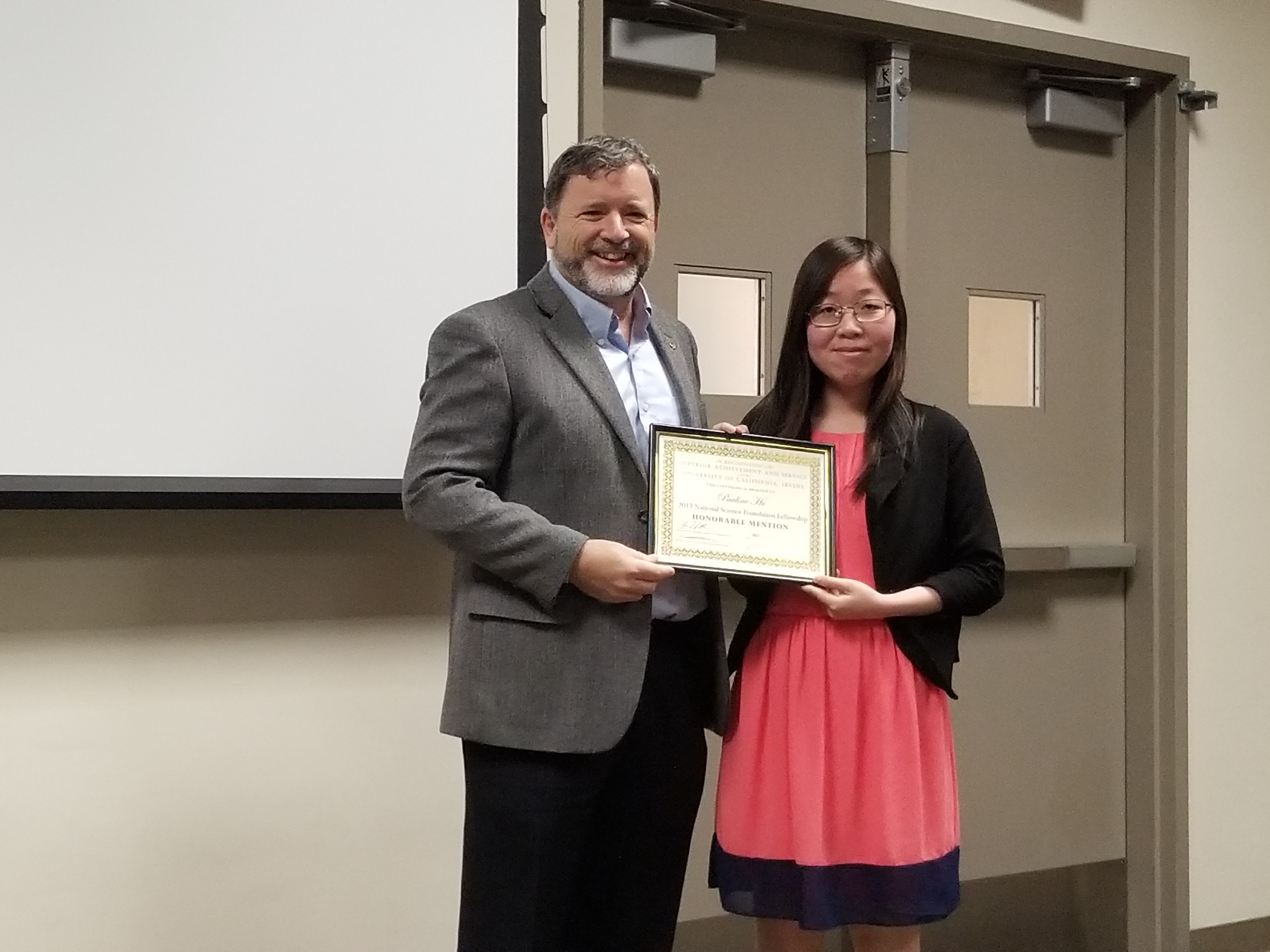
    Ho with Vice Provost of Teaching and Learning, Michael Dennin

Pauline recently graduated cum laude from UC Irvine with a double major in Education Sciences and Social Policy & Public Service. She came to the United States ten years ago and did not speak any English and still considers her English language skills to not be proficient. At UCI, she worked in the Digital Learning Lab under the supervision of Dr. Mark Warschauer. As an undergraduate, she presented her independent research at different local and national conferences. She has achieved a variety of academic honors such as the AERA 2017 Undergraduate Fellow, 2017 Chancellor’s Award of Distinction and the School of Social Science’s Order of Merit. She applied for the 2016-2017 National Science Foundation Graduate Fellowship and received Honorable Mention as an undergraduate senior. Currently, she is pursuing her doctorate in Educational Psychology at the University of Wisconsin, Madison.


How did I hear about the NSF fellowship?

I knew about the NSF Fellowship through my graduate student mentor. In the summer, my graduate student mentor met with me individually to discuss my future plans after UCI. At that time, I was struggling between whether I should pursue a Masters or a PhD. I was very passionate about doing research, but I was worried that I was not ready. At that time, I also didn’t know my research interests.  My main interest is to help English Language Learner (ELL) students like me do better in school. After a long conversation with my mentor, she told me about the NSF fellowship. At that moment, I thought “applying for a national fellowship – am I even qualified?”

I’m very thankful that I had the opportunity to work at the SOP office as a student intern during my undergraduate time. Through this position, I realized the application process can be overwhelming, but rewarding. I heard stories about students who went through the process and received awards and students who didn’t get the award but received acceptance to grad school. I know that it was not just about getting the award, it was also the process and the growth. Therefore, I decided to give it a try.


What resources have you used when preparing your application?

My mentor provided me with a variety of resources on campus – past winning applications, some books about Science Motivation, etc. From my experience working at SOP, I know that applying for competitive scholarships can be overwhelming. So I actively reached out for more resources and guidance.

As I was working closely with my mentors, I reached out to Michelle and Courtney to get their advice on my NSF application. They read through my application essays carefully and provided many helpful comments. Their expertise in helping students apply for national scholarships gave me a realistic perspective on my qualifications and applications. By the time I submitted my application, I was on the ninth draft of both essays.


What did you learn or gain from the process?

Throughout the process of revising my research proposal, I also figured out my plan for after graduation – I want to pursue a doctoral degree and conduct research. As I was working on my application, I was challenged to think about the intellectual merit and broader impacts of my research. I realized that I can contribute to the literature as well as make an impact in society. That’s exactly what I want to do with my life. Therefore, I went on and submitted my applications for several PhD programs. I used my NSF personal statement and revised it for my graduate school applications.

After spending over four months working on my application, I was honored to receive Honorable Mention. Even though I’m not getting the financial support from NSF, the skills that I gained from the application process are very useful. I was accepted into the number one ranked PhD program in Educational Psychology at the University of Wisconsin, Madison and recieved full-funding.


Tips for students who are interested in applying for the NSF.

If you have the research experience, give it a try! It doesn’t hurt to try, and you will grow a lot throughout the process. Given that it is very similar to graduate school applications, it is not too time-consuming because you don’t need to write a completely different essay. Instead, if you are serious about graduate school, start on your NSF application in the summer. Get a lot of help from your advisor and the SOP staff. Then, by the time you submit for grad school, you will have a strong application. If you are not sure about grad school yet, still give it a try in the summer. NSF really challenges you to think deeply about your research and what you want to do as a researcher. The intellectual merit and broader impacts criteria will make you think more seriously about your research interests. The amount of work to prepare a strong NSF application is very similar to the level of work that you should be doing in grad school as well. So if you can manage the process or learn to manage the process early, you are more ready for grad school.

Filed Under: SOP Blog

Sunny Liu – Fulbright Winner – Nigeria

June 21, 2017 by sklrship@uci.edu

Sunny graduated from UCI in 2015 as a magna cum laude graduate having triple majored in Public Health, International Studies, and Anthropology. Sunny was a recipient of the Chancellor’s Award of Distinction and awarded the School of Sciences’ Order of Merit Award. Sunny was awarded the Fulbright Scholar Program in 2015-16 to conduct public health research in Nigeria. Additionally, she served in the Peace Corps for the Community and Youth Empowerment Project in Fiji. Her research interests include immunology, epidemiology, disaster medicine, and the emergency response to Ebola. She plans to earn a doctorate in Global Health as well.

http://www.socsci.uci.edu/files/news_events/2015/liu,%20sunny_220.jpg


Nigeria seems like an odd choice for those applying for a Fulbright Scholarship. The statistics says it all. The majority of Fulbright applicants choose their destination in the Western Hemisphere or in emerging economic powerhouses in the East. Additionally, Nigeria’s international reputation is tainted by news stories that reduces the country to a few keywords: Boko Haram, abductions, political instability, economic recession, and corruptions.

To have the words “Nigeria” and “good” in the same sentence is highly unusual. Therefore, I was not surprised to find many puzzled faces when I announced my departure to Nigeria in late March to embark on a journey of curious discoveries.

In my previous trips to Africa, I ventured on a life-changing journey to Kenya. Then, as a naive teenager, I was stunned by the beauty of Kenya and its people. Like many Americans and people from other parts of the world, I assumed that the word “Africa” is synonymous with disease, poverty, and suffering. My experience in Kenya was a life changing one where I found my passion and direction in life undergoing a paradigm shift. I longed to return to Africa with greater humility, knowledge, and skills.

My first impression of Nigeria came from Nigerian authors such as Uzodina Iweala and Chimamanda Ngozi Adichie. These author’s work challenged the West’s stagnant and biased view of Nigeria as the most populated country on the African continent.Iweala and Adichie told the true story of Nigeria through shedding light on the richness of Nigerian history, portraying the diversity within their culture, and highlighting the complexity of their social issues.

Following the 2014 Ebola outbreak in Lagos (a metropolitan center with a population of over 22 million), Nigeria became the poster child of the international public health community overnight. I arrived in Lagos with little expectations and much hope to learn about a country as culturally diverse as Nigeria. However, there were many obstacles awaiting me. Despite these obstacles, my Fulbright experience has become an opportunity for self-reflection, discovery, and character building.

Filed Under: SOP Blog

  • Page 1
  • Page 2
  • Page 3
  • …
  • Page 7
  • Next Page »

Primary Sidebar

Categories

  • Q & A's with Recipients-Tips & Adventures
  • SOP Blog

Archives

  • January 2022
  • April 2020
  • March 2020
  • February 2020
  • January 2020
  • November 2019
  • July 2018
  • September 2017
  • June 2017
  • May 2017
  • January 2017
  • December 2016
  • September 2016
  • June 2016
  • April 2016
  • January 2016
  • November 2015
  • May 2015
  • March 2015
  • January 2015
  • November 2014
  • September 2014
  • May 2014
  • March 2014
  • January 2014
  • November 2013
  • October 2012
  • September 2012
  • December 2011
  • August 2011
  • February 2011
  • January 2011
  • October 2010
  • July 2010
  • April 2010
  • February 2010
  • January 2010

Meta

  • Log in
  • Entries RSS
  • Comments RSS
  • UCI Sites

© 2025 UC Regents